
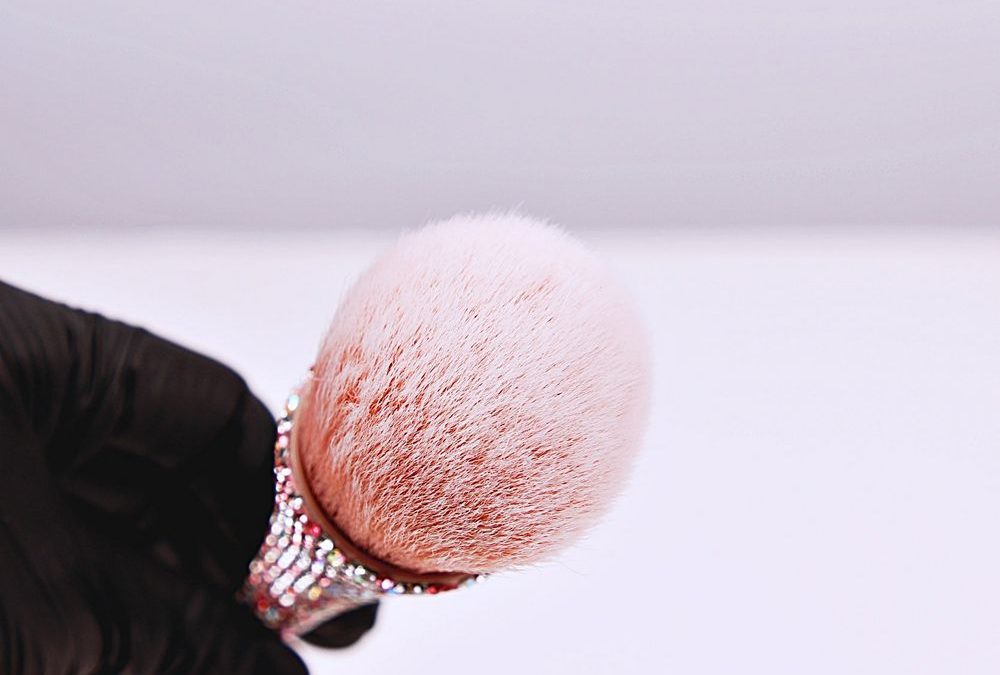
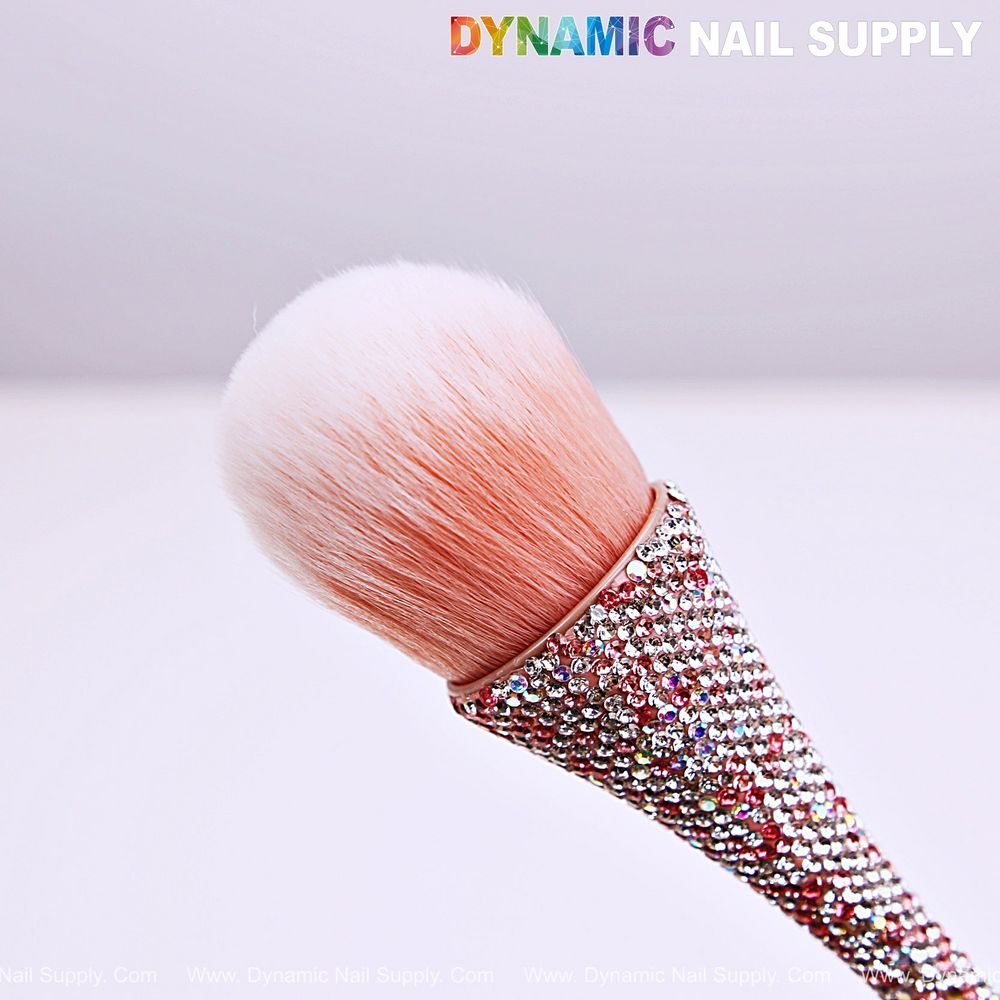
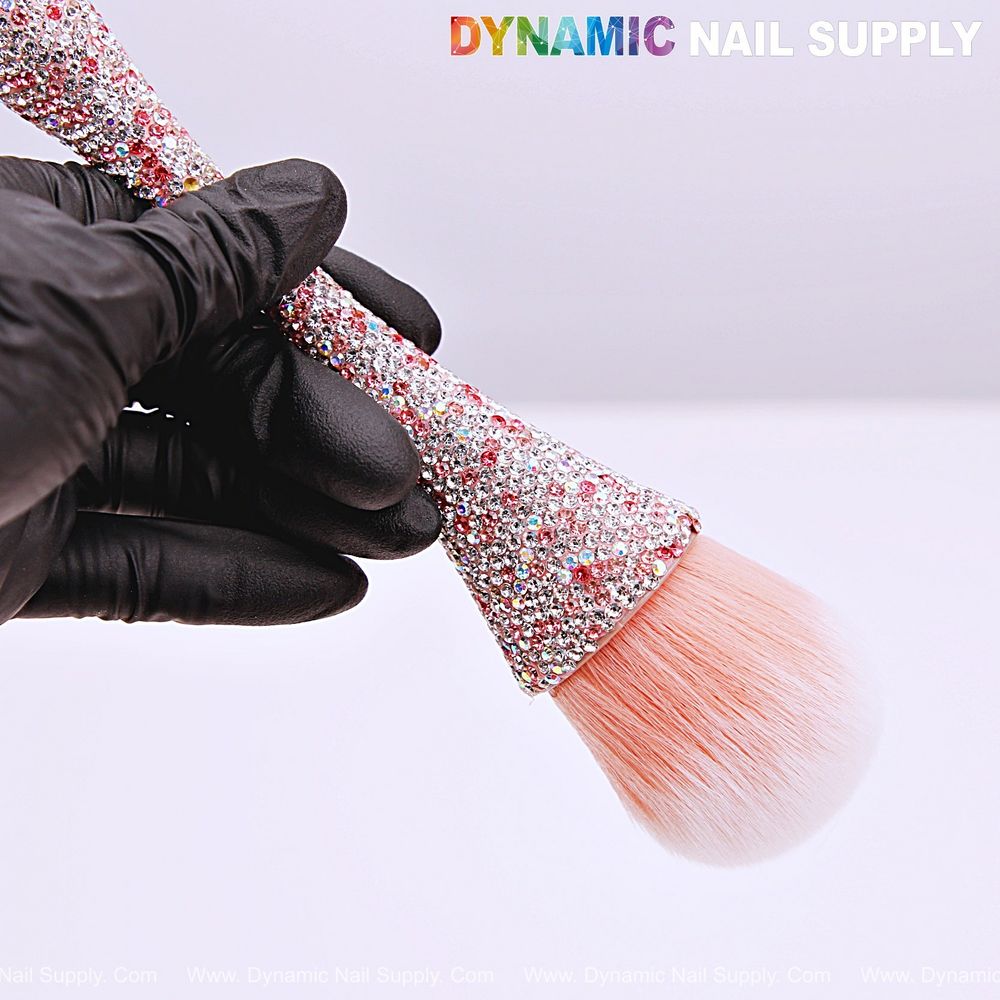
Definition: Maintain rhinestone handle brush means a routine of gentle cleaning, targeted handling, and storage practices designed to preserve the faceted rhinestone handle and the pale pink-to-white ombré bristles of the RB02 round-head dust brush while keeping it hygienic and ready for salon use.
How do we inspect the RB02 before and after each service?
Inspection is the fastest way to prevent long-term wear. We carry out a quick visual and tactile check both before first use in a shift and after each client service.
- Visual check: look for loose or missing rhinestones on the handle and for discolored or matted areas in the bristle crown.
- Tactile check: run a clean finger along the handle to detect snagging stones and sweep the bristles lightly to assess resilience.
- Functional check: make sure the round brush head maintains a soft, even sweep and does not shed bristles during a test sweep over a waste-free surface.
What is the routine cleaning sequence for the rhinestone handle?
We separate handle care from bristle care so that neither element is exposed to unnecessary moisture or solvents. Follow these steps in order.
- Work area: place the brush on a soft cloth or tray with the bristles facing up to avoid contact with contaminants.
- Loose debris: use a soft makeup-style spoolie or a small, dry microfiber cloth to remove dust trapped between rhinestones.
- Spot cleaning: if fingerprints or surface film are present, lightly dampen a corner of a lint-free cloth with plain water and gently blot the stones. Do not soak the handle.
- Drying: immediately follow with a dry portion of the cloth, patting until no moisture remains between stones. Allow the brush to air-dry upright for several minutes to ensure any trace dampness evaporates.
Pro tip: use minimal liquid and blot rather than rub the rhinestone area to avoid loosening adhesive used on the handle.
How do we clean and maintain the pale pink-to-white ombré bristles?
Bristle maintenance focuses on removing powder and debris without altering the soft texture or the ombré color transition.
- Dry dust removal: tap the brush gently over a waste container to dislodge loose acrylic powder and filing dust. Then sweep across a clean disposable wipe or a dedicated dry cloth.
- Deep clean (periodic): for accumulated residue, prepare a small bowl of lukewarm water with a very mild, non-alkaline soap. Swirl the bristles in the water only; keep the water level well below the ferrule and handle.
- Rinse carefully: lift the bristles and rinse under a gentle stream of lukewarm water, again avoiding wetting the handle or ferrule area.
- Reshape and dry: reshape the round head by smoothing the bristles with your fingers, then stand the brush upright with the bristles up so airflow can help dry the base without soaking the handle. Allow to dry fully before reuse.
Pro tip: limit deep cleaning to when visible residue is present; frequent water exposure shortens adhesive life at the handle.
Which cleaning agents and tools should we avoid?
Choosing the wrong solvent or tool is a common cause of long-term damage. We avoid the following to protect both the rhinestone handle and ombré bristles:
- Harsh solvents (acetone, strong alcohol solutions, nail polish removers): these can dull or strip the adhesive and may discolor synthetic fibers.
- Abrasive brushes or scrubbing pads: they can scratch faceted stones and abrade bristle tips.
- Immersion of the handle: do not soak the rhinestone-encrusted handle, which risks loosening stones and wetting the glued areas.
How do we prevent polish, gel, or powder damage during service?
Most accidental damage occurs during nearby product application. We adopt these handling practices to reduce risk.
- Designated zones: keep the brush on a clean towel or in a holder offset from active polish, gel, or acrylic stations.
- Timing: use the dust brush for dry dust removal only; avoid using it on wet product or tacky layers.
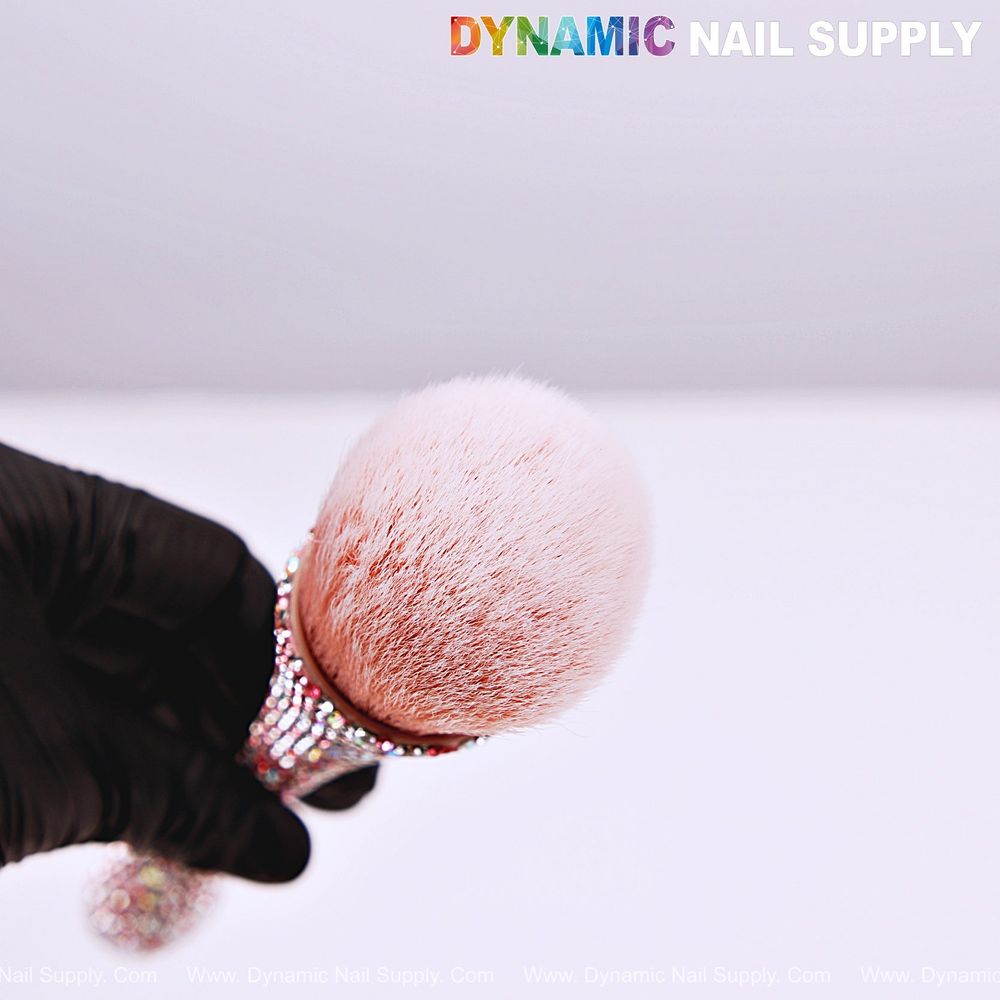
- Glove contrast: when working, place the brush against darker surfaces or your gloved hand to easily spot stray product on the pale bristles before it sets.
What storage and transport habits extend the RB02 lifespan?
Storage is a low-effort way to protect both the sparkling handle and the ombré head between clients.
- Upright storage: keep the brush upright with bristles up in a ventilated holder to prevent flattening and to allow any residual moisture to evaporate.
- Padded pockets: when transporting, place the brush in a padded compartment or small zip pouch so the rhinestones do not rub against other tools.
- Temperature awareness: avoid exposing the handle to extreme heat or prolonged direct sunlight that could affect adhesives and stone finish.
Which small repairs and replacements do we perform in-salon?
Minor touch-ups can keep the brush usable without professional repair.
- Loose stone: secure a slightly loose rhinestone by cleaning the immediate area, applying a microscopic dot of clear, non-solvent adhesive, and allowing it to cure fully off a service bench.
- Matt bristles: trim only visibly frayed ends with sharp scissors and then reshape; avoid trimming to change shape frequently.
- Replacement decision: if multiple stones are missing or if the handle shows significant adhesive failure, retire the brush from client use and replace it.
What safety and hygiene notes should we follow?
We balance aesthetics with salon hygiene and safe handling.
- Cross-contamination: if the brush touches a client’s skin or open wounds, discontinue use for that client and perform a full clean before reusing.
- Product contact: avoid using the brush for product application; it is a dust-removal tool and should remain dry for effective sweeping.
- Allergens: if you use cleaning solutions, ensure adequate ventilation and avoid fragranced chemicals that can irritate some clients and staff.
Quick review checklist
- Inspect stones and bristles before and after each use.
- Remove loose dust dry; deep clean bristles only when necessary.
- Spot-clean rhinestones with a damp cloth; never soak the handle.
- Avoid solvents and abrasive tools near stones and fibers.
- Store upright and transport in padded pockets to prevent abrasion.
- Repair single loose stones with minimal clear adhesive; replace if damage is extensive.
We designed these notes around the RB02 Bristle round-head dust brush with its rhinestone-encrusted handle and blush pink-to-white ombré bristles so you can keep the tool both functional and visually presentable during salon service. For practical use with client prep and daily workflow, keep this brush dedicated to dry dust removal and treat the handle gently to preserve the high-shine faceted stones. Prices may change, but careful maintenance preserves value and performance; consider the brush part of your regular tool checklist.
We recommend maintaining the RB02 round-head dust brush with the routine above to keep it ready for client prep, and RB02 round-head dust brush will help you confirm the exact design features.